Wednesday, March 7, 2012

Antony: Separation From the World


Background Check:
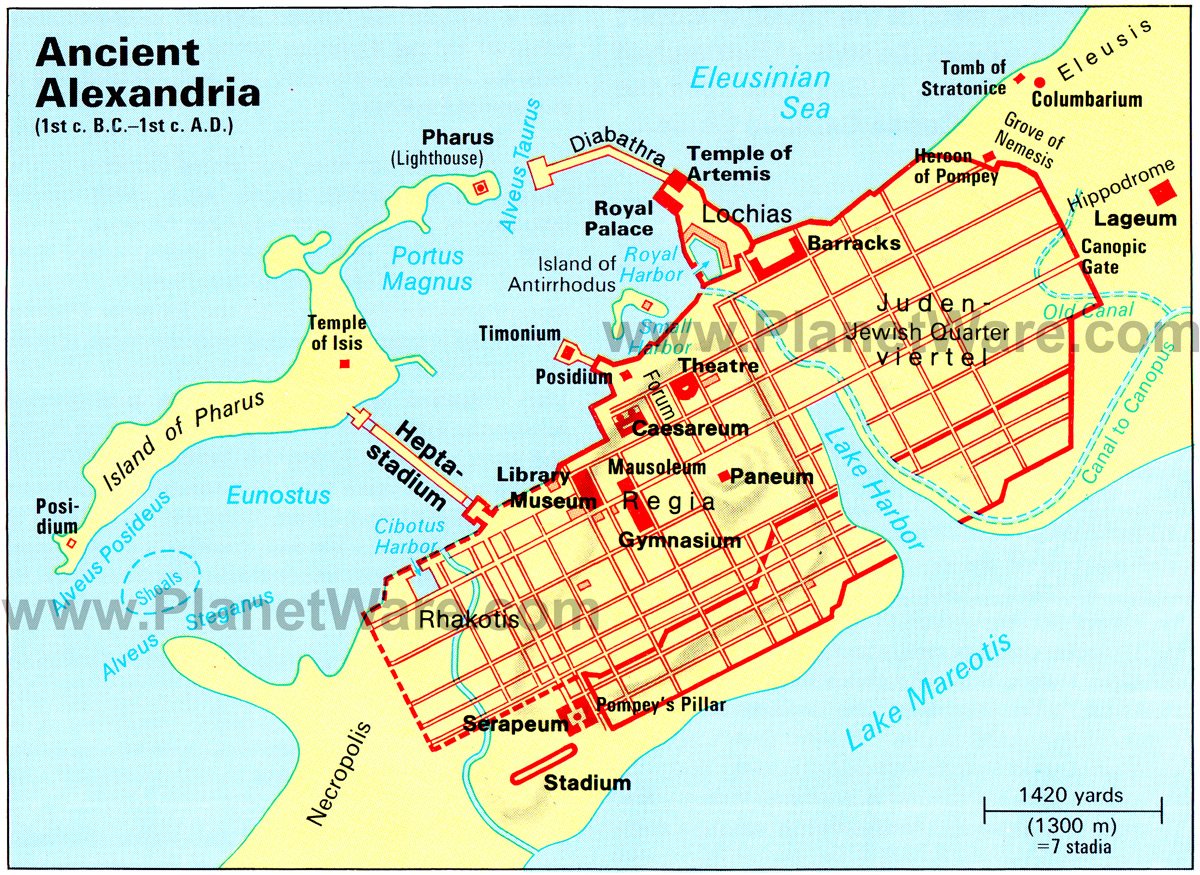
In the late 200s and early 300s, in many places of the Roman Empire, Christians were being arrested for their faith. But Anthony lived in Alexandria, Egypt, which was a great Christian city in that time. There was preaching of the gospel every day, the Lord’s supper every day and you could walk down the street and talk openly with other Christians about the faith. It was an open place where Christians had freedom to express themselves.

His Story:
Anthony saw Alexandria as a city of decadence and worldliness. Christians not only went to church, they also went to the theatre and the gymnasium where actors and atheletes performed nude in public. Many Christians were as involved in secular philosophy as they were in the truth of Christ. And there were many who were involved in sexual immorality and gossip.

Anthony decided that he could no longer live in such a corrupt atmosphere and be able to be pure before Christ. He knew of some people who lived apart from any worldly people. He learned from them how to pray and fast and so become spiritually strong. At first, he lived within the city, but in cemetaries, where no one else lived.

Finally, to be more separated, he left Alexandria and went out to live in the desert. He ate grasshoppers and small plants and wore rough clothing, like John the Baptist. He also found that in the wilderness there were demons ready to attack him. He spent much time in fasting and prayer overcoming the temptations and attacks of demons.

Even though he lived alone, he had visitors. They were rare to begin with, and Anthony was at first afraid that they would interrupt his time alone with God or tempt him to compromise his standards. However, he remembered Jesus’ command to be hospitable to his brothers, so Anthony welcomed them and gave them something to eat and a place to sleep. He found that the visitors didn’t disturb him, but most of them wanted to learn from him how to live a godly life.

WWJD
Jesus was also deeply concerned with purity. He told people that it was better to cut off a hand or leg than to disobey God—now he didn’t mean this literally (otherwise every Christian would be missing a limb!), but he did mean that we have to separate ourselves from everything that makes us disobey God. This could mean our friends or certain places that causes us to sin. Jesus was as serious about purity as Anthony was.
But if Jesus was counseling Anthony, he probably would have encouraged him in another area as well: evangelism and fellowship. Anthony was serious about loving God, but loving his neighbor is just as important. We need to remain as pure as we can, but we shouldn’t separate ourselves from everyone we know. Some people still need to hear the gospel, and we need the encouragement of other Christians as well.

A Word From Our Sponsor:
"If your hand causes you to stumble, cut it off; it is better for you to enter life crippled, than, having your two hands, to go into hell, into the unquenchable fire, where their worm does not die, and the fire is not quenched. If your foot causes you to stumble, cut it off; it is better for you to enter life lame, than, having your two feet, to be cast into hell, where their worm does not die, and the fire is not quenched. If your eye causes you to stumble, throw it out; it is better for you to enter the kingdom of God with one eye, than, having two eyes, to be cast into hell, where their worm does not die, and the fire is not quenched.” Mark 9:43-48

The Final Word (of Men):
After spending years in the desert alone, his determination to live in purity became well known, especially in Alexandria, but in other cities as well. In order to accomplish this for themselves, others also decided to live in the desert. In the desert, they learned about the importance of prayer, discipline and hospitality. The group of followers of Anthony were later called “the Desert Fathers.” Anthony and the Desert Fathers became the inspiration of the monastic movement throughout Christianity.

Helpful Hint: Hating what God Hates
Sin is anything that is hateful to God. And to the faithful, whatever God hates, they hate. If there is any portion of their life that God is displeased with, they destroyed it. While sometimes they didn’t always understand what it was that God hated, they were faithful to do what He wanted. As we will see, Therese got rid of her pride and self-interest. Menno got rid of his laziness. Patrick got rid of his bitterness. And Ignatius got rid of his worldliness. They knew that sin was not consistent with a life faithful to God and they did all they could to repent.

Check It Out:
Anthony of Alexandria by Athenatius
The Wisdom of the Desert Fathers
Christian History: Antony of Egypt

Montanus: Listening To The Spirit


Background Check:
Early in the Church’s history, they were speaking about Jesus and the church was growing. But not everyone was happy about this—Jews and pagan priests wanted the church to be stopped. Even the Roman government, led by Caesar who was the empire’s lord and god, did not want the church to be in competition with the Empire. In many places in the Roman empire, Christians suffered under the Romans. There were rumors that Christians ate people and drank blood. And they did not acknowledge the gods that the Romans worshipped. So the Romans arrested and killed any Christian who did not renounce Christ.
This was very difficult for many gatherings of Christians throughout the empire. Most congregations of Christians were able to stay together because they strictly obeyed their leaders, whom they called Overseers. They gave these Overseers complete say over what they believed, how they acted and how they responded to authorities.

His Story:
In one province, Phrygia, the persecution was especially heavy in 172. The Phrygians did not trust authorities or those who oppressed others. So they did not want to establish an Overseer over them to tell them what to do. Nor did they want other Overseers from other congregations tell them what to do. But who should lead the congregations? Montanus, a man in the Phrygian church said, “We must not listen to men, but to God. Let us listen to the Holy Spirit and He will lead us rightly.” And so they began to listen to the Spirit and to do what He said. They would see visions, have dreams from God, speak in strange, unknown tongues and say words that came directly from God.

However, Montanus and his followers were not always easy to listen to. They did crazy things and said even crazier things. People thought they were raving and that they talked like madmen. And they did sometimes say things that were opposed to Scripture. But Montanus did hear the Spirit of God and desired to follow him alone.

WWJD:
In this way, Montanus reliance on the Spirit was in line with Jesus’ teachings. Jesus told his followers to listen to God’s Spirit and to trust what the Spirit had to say. Paul also told his churches not to “quench the Spirit” but to listen to those who had messages from the Spirit. The early church leaders forgot about this part of the teaching of Jesus.

But Montanus himself forgot some of the teaching as well. Jesus taught that the Holy Spirit would remind the believers of what Jesus had said and would be in line with Jesus’ teaching. Paul and John both taught that the spirits of prophets should be tested to make sure that they are of God’s Spirit, and that they weren’t being decieved. Paul also said that a particular prophecy had to agree with the rest of the church. Montanus himself prophesied some future events that never happened. Thus, sometimes he and his followers did not speak for the Spirit. They needed to be tested, but not rejected.

The Final Word (of Men):
Over time, the Christians outside of Phygia decided that the Montanists were heretics—not teachers of the true faith—and rejected them and their teaching. From that time, anyone who wanted to listen to the Spirit and say what the Spirit said was rejected as a heretic.

A Word From Our Sponsor:
But the Helper, the Holy Spirit, whom the Father will send in My name, He will teach you all things, and bring to your remembrance all that I said to you. John 14:26

I have many more things to say to you, but you cannot bear them now. But when He, the Spirit of truth, comes, He will guide you into all the truth; for He will not speak on His own initiative, but whatever He hears, He will speak; and He will disclose to you what is to come. He will glorify Me, for He will take of Mine and will disclose it to you. John 16:12-14

Helpful Hint: Listening to the Spirit, not men
The Faithful were those who focused on God in Jesus—on his word, on his life and on what he was telling to them right at the moment through the Holy Spirit. The Spirit taught them the Bible and told them what they were to say. And if men’s teachings disagreed with them, the Faithful didn’t care. What Jesus said and what the Spirit taught them was more important. Montanus spoke the visions and prophecies the Spirit gave him, even if he is rejected by the rest of the church. As we will see in later chapters, George Fox was thrown in prison for teaching what the Spirit taught him and Hudson Taylor focused on what the Spirit was telling him, not on the traditions of men. What the Spirit says is more important than human reasoning and belief. So the Faithful listen to the Spirit and obey Him.

Paul: Jesus is the Only Lord


Background Check:
Israel in the first century was extremely complicated. The Jewish people were those who lived in Israel and they were very strict about their religion. They believed that God was coming to change the world and to put his righteous people in charge. But there were different ideas of who these righteous people were: Some thought that they were people who made sacrifices in the Jewish temple. Others thought that it was those who followed certain commands of Moses strictly—such as not working on the Sabbath and following certain festivals. Then Jesus came and his followers were named Christians. The Christians believed that they needed to simply follow and obey Jesus and to take up his cross and that they would be righteous before God. But many people disagreed with the Christians and hated them for their teaching.

His Story:
Saul was a man who hated Christians. He despised them because he believed that they were teaching things that were tearing down his belief, Judaism—believing in the temples and in the commands of God from Moses. He hated Christians so badly that he got permission from the rulers of Judaism to arrest Christians and have them killed by the authorities in a town called Damascus. On his way to Damascus, Paul was stopped by a vision from God. There was a great spiritual power in his vision who said, “Saul, Saul, why are you persecuting me?” Saul didn’t know who this great power was so he asked, “Who are you, Lord?” And the power answered, “I am Jesus whom you are persecuting.” The vision stopped, but Saul couldn’t see. His servants took him to Damascus and there a Christian named Annias healed him and baptized him. Saul renamed himself Paul and began to teach that Jesus was the Son of God, especially to the Gentiles, those who were not born under Judaism.

Paul went all over Asia Minor and Europe teaching that Jesus is the way to God for everyone—Jew and Gentile. Sometimes teachers would follow him and say, “You obey the commands of Moses to follow Jesus.” Paul spoke very strongly—“Don’t return back under the slavery of the Law of Moses! Jesus set us free to follow him alone!” Sometimes people would be angry or act in sin and Paul would say to them, “Don’t think the way you did before you were a Christian! Jesus set you free—don’t act like a slave of other gods who don’t love!” Paul wanted every Christian to have faith and to act like Jesus. To act like someone else is to be under their authority.

Because of his teaching, Paul was often arrested and beat up. He was arrested in the temple of God and held as a prisoner for many years. Eventually Paul proclaimed the gospel to the ruler of the world, Nero. Nero had Paul beheaded for teaching about Jesus.

A Word From Our Sponsor:
The eye is the lamp of the body; so then if your eye is clear, your whole body will be full of light. But if your eye is bad, your whole body will be full of darkness. If then the light that is in you is darkness, how great is the darkness! No one can serve two masters; for either he will hate the one and love the other, or he will be devoted to one and despise the other. You cannot serve God and wealth. Matthew 6:22-24

In everything, therefore, treat people the same way you want them to treat you, for this is the Law and the Prophets. Matthew 7:12

Jesus said to him, "I am the way, and the truth, and the life; no one comes to the Father but through Me. If you had known Me, you would have known My Father also; from now on you know Him, and have seen Him."
 John 14:6-7

Helpful Hint: Nothing But Jesus
These faithful were faithful simply because they had dedicated themselves to Jesus and nothing would stand in their way. They wanted what God wanted to give them and knew that only following Jesus would get it for them. They wanted God’s truth, God’s life, God’s joy, God’s blessing—and all of that came through living in Jesus. Everything else seemed like garbage to them—all the earthly popularity, wealth, comforts. They could have had anything they wanted and they chose Jesus. Francis ran his father’s business, but gave it all away for Jesus. Paul was an important rabbi, but he gave it all up for Jesus. Ignatius was gaining glory in the court, but he determined it was pointless without Jesus. Jim Elliot could have done anything he wanted—but he wanted nothing but Jesus. All of these people were great, not because of what they achieved but because they achieved nothing but Jesus.

Check It Out:
The Acts Of the Apostles by Luke
Paul: Apostle of the Heart Set Free by F.F. Bruce

Wednesday, November 25, 2009

The Myth of Democratic Civilization

Equality in civilization is a myth. There must be those who are economically oppressed and who are socially lowly in order for others to be economically and socially “free”. We must have Wall Mart employees, migrant farm workers and sweat shop lackeys in order to create a prosperous middle class. The only economically democratic society is an agrarian one.

Monday, January 19, 2009

Thursday, October 23, 2008

Justice I

Lord, there is evil.

There is evil done against me in so many ways.
Some would say they are little things:
The unkind, unfair judgment;
The stealing of a few dollars;
The brief threat of violence;
The disinterest of those who have claimed to care;
To me, these are major events
that shape my life and my conscience.

Lord, bring your justice:
true justice.
I ask not that you destroy the evildoers,
Nor do I bring down curses upon their children.
Although it is difficult to say, I ask:
Father, forgive them
For they know not what they do.
Don't forgive them out of some invented complacency
Nor from an all-encompassing mercy that is not of you.
Rather, I pray that you shape them,
reform them to be forgivable.
Create justice in their hearts, Lord.
Soften them to be merciful;
Color in them your humility;
Let them walk in the path of your trust.

As I was once one of them—
A liar,
A cheat,
A thief,
A hater,
An immoral person--
and you redeemed me.
Allow them to be as your Son
as your children
as You.
And then, as they forgive those
who do evil against them
May you forgive them of the evil done against me.
Lord, bring your justice:
true justice.

I open up my heart to give my all to you
All in you
All in you.

May your kingdom come.

Wednesday, October 22, 2008

New Website

Anawim has a completely new website with a new look and new content.

And, most importantly for this blog, all of the teachings about Jesus and the Anawim are in the teaching section, all illustrated! (That means we put a cool picture next to each of the teachings)

And, heck, if you like the Anawim Bible teachings, you might want to check out the section under poverty, where there are recommendations about how the church can support the homeless and the mentally ill.

You can find it at:
www.nowheretolayhishead.org

That's "No Where To Lay His Head Dot Org", in case long words give you a headache.